Tebeau Group

10 Website Design Trends
Defining 2026

Every trend below has a live, interactive demo you can play with right now. These are not screenshots — they are working examples of the patterns shaping modern web design in 2026. Written by the team at Tebeau Group, Dallas's top AI web design agency.

12 min read· 10 interactive demos· 10 AI-generated images·May 21, 2026
JT
By Johnathan M. Tebeau· @tebeaugroup

Web design in 2026 is not just about how a website looks — it is about how it thinks, adapts, and responds. Artificial intelligence has moved from a buzzword to a core design tool. Interfaces now anticipate what you need before you ask. Pages tell stories as you scroll. Buttons feel physical when you click them.

At Tebeau Group, we track these shifts closely because our clients — home service businesses, contractors, and local companies across Dallas — need websites that stay ahead of the curve. A website built on 2022 design patterns is already losing ground to competitors who have embraced what is working now.

This guide covers the 10 biggest web design trends for 2026, each with a live interactive demo, a real-world explanation written in plain English, and practical advice on how your business can use it. We also share examples from our own work — follow us on Dribbble to see these trends applied to actual client projects.

01

Ambient Intelligence Interfaces

Your website knows the context. It adapts to time of day, user behavior, and past visits — automatically, without the user having to do anything.
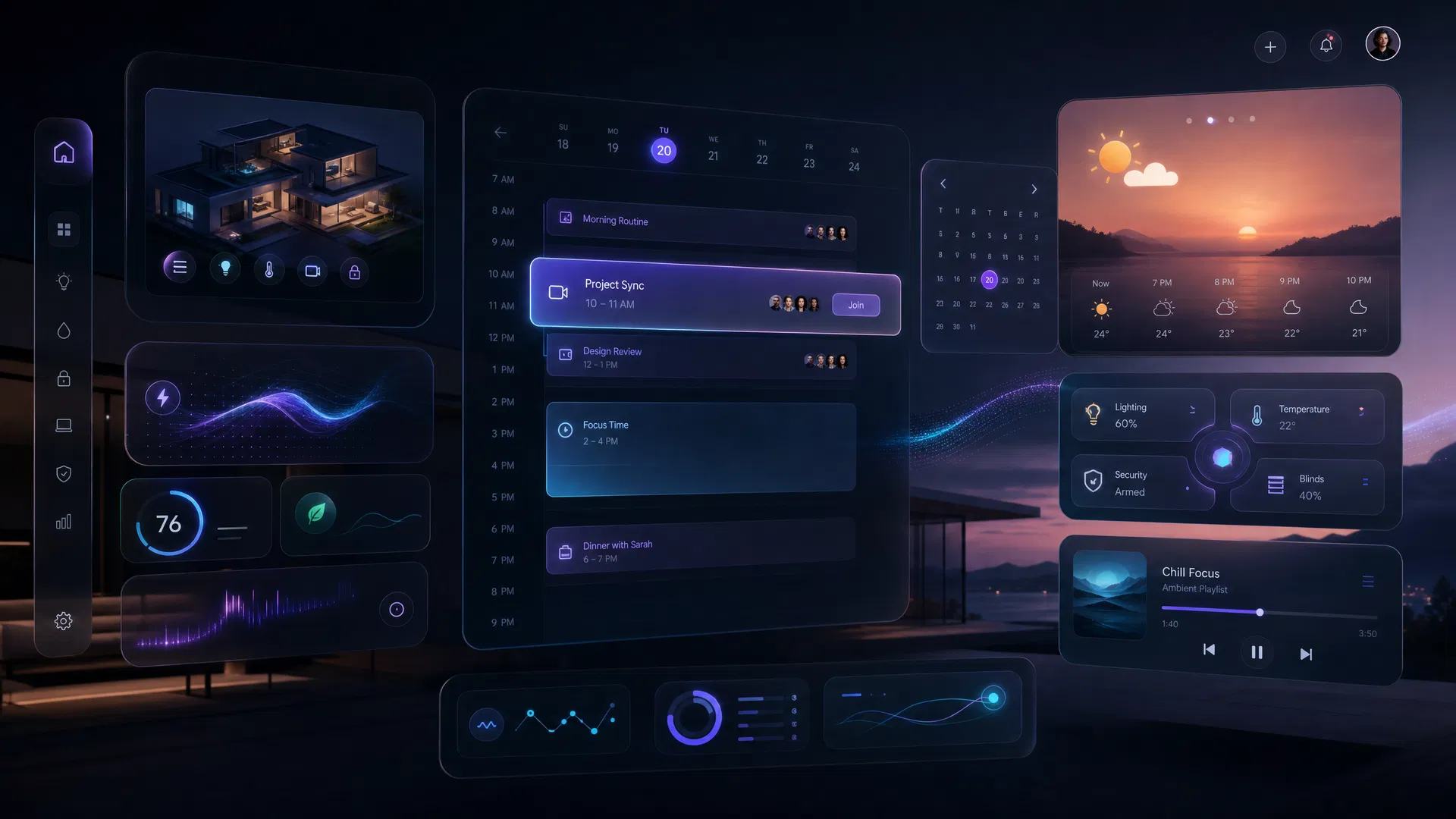
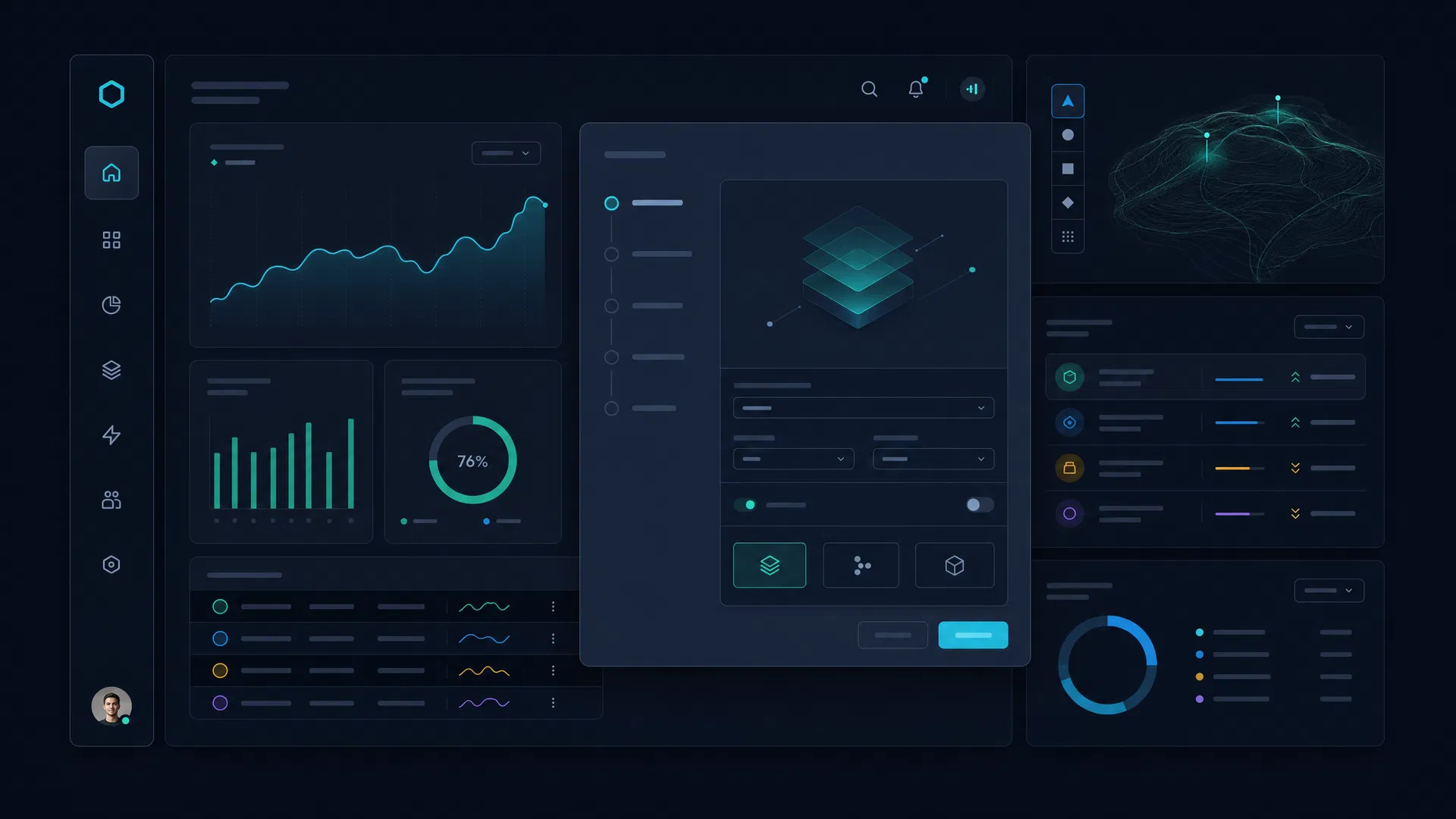
Ambient intelligence UI dashboard that adapts to time of day and user context
Good morning! Your 9 AM stand-up starts in 12 min.
68°F
Temp
100%
Lights
OFF
Focus

Click a time of day to see the UI adapt automatically

Think about the best apps you use every day. Spotify shifts to sleep sounds at night. Your phone dims automatically at sunset. Google Maps reroutes before you even realize there is traffic ahead. That is ambient intelligence — the interface responds to your world without you having to configure it.

In 2026, the best websites do the same thing. A home services website might show a "Book Emergency Service" button at 11 PM on a cold night. A contractor's dashboard might surface the day's jobs at 7 AM and switch to invoicing tools at 5 PM. These small, context-aware shifts make users feel like the product was built specifically for them.

For home service businesses, this trend is a direct revenue driver. Our AI lead generation systems use behavioral signals to surface the right offer at the right moment — turning passive visitors into booked appointments.

We have been exploring ambient UI patterns in our client work and sharing the results on Instagram @tebeaugroup. Follow along to see real examples from home services websites we have built.
02

Spatial UI Design

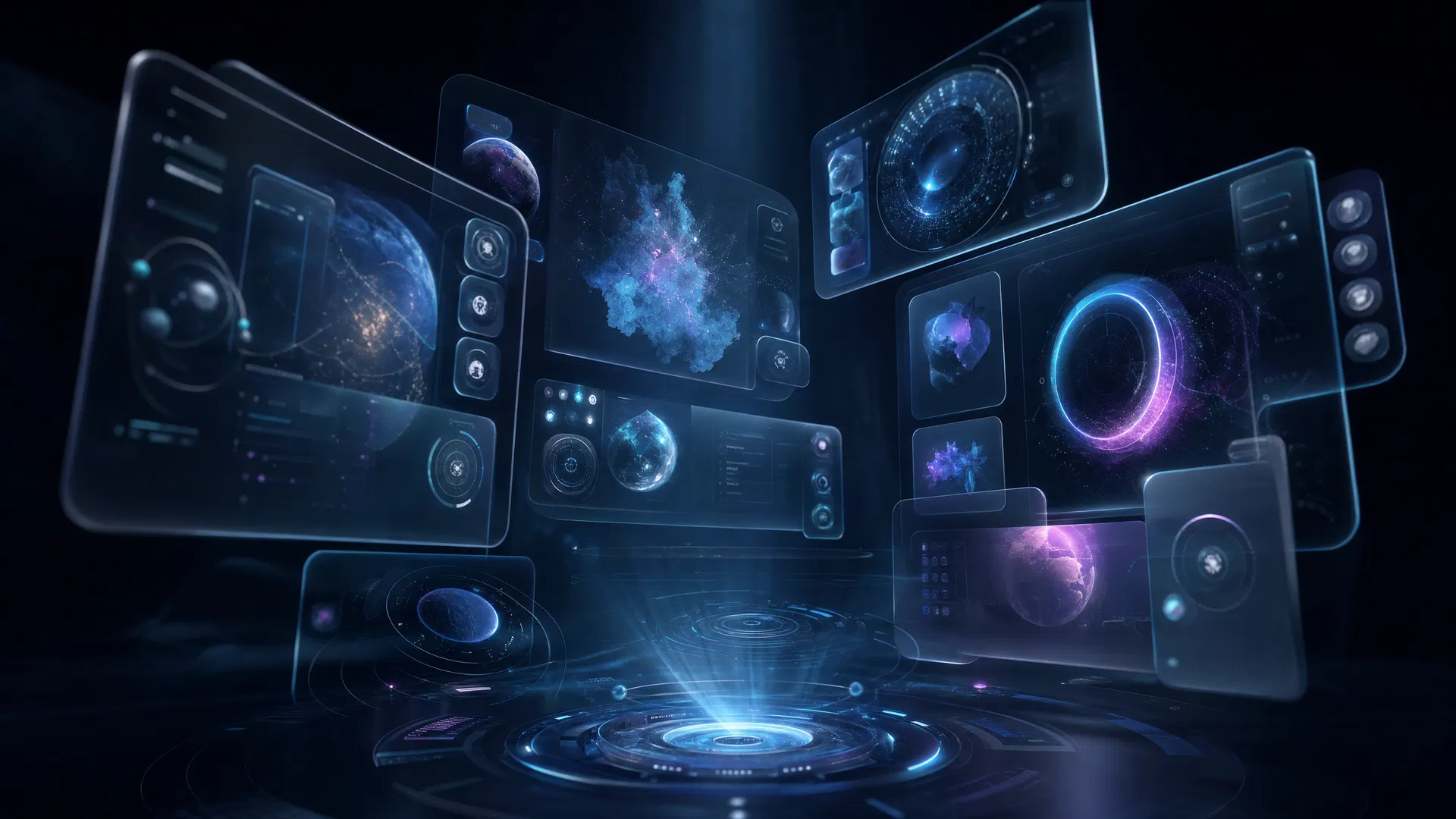
Interfaces are gaining depth. Inspired by Apple Vision Pro and spatial computing, 2026 web design uses layered panels, 3D tilt, and perspective to create a sense of physical space on flat screens.

Spatial UI design with 3D floating glass panels and depth layers
Analytics
Hover to tilt
Security
Hover to tilt
Global
Hover to tilt

Spatial design is not about making everything look like a video game. It is about using depth, shadow, and perspective to create a clear visual hierarchy. When one element appears to float above another, your brain instantly understands which one is more important. That is useful design, not decoration.

The 3D tilt cards in the demo above use spring physics — they follow your cursor with a natural, weighted feel. This kind of micro-interaction makes a website feel premium and polished without adding any complexity for the user.

Our website design services incorporate spatial design principles to make our clients' sites stand out from the sea of flat, template-built competitors. You can see examples of our spatial UI work on our Dribbble profile.

03

AI-Generated Interface Design

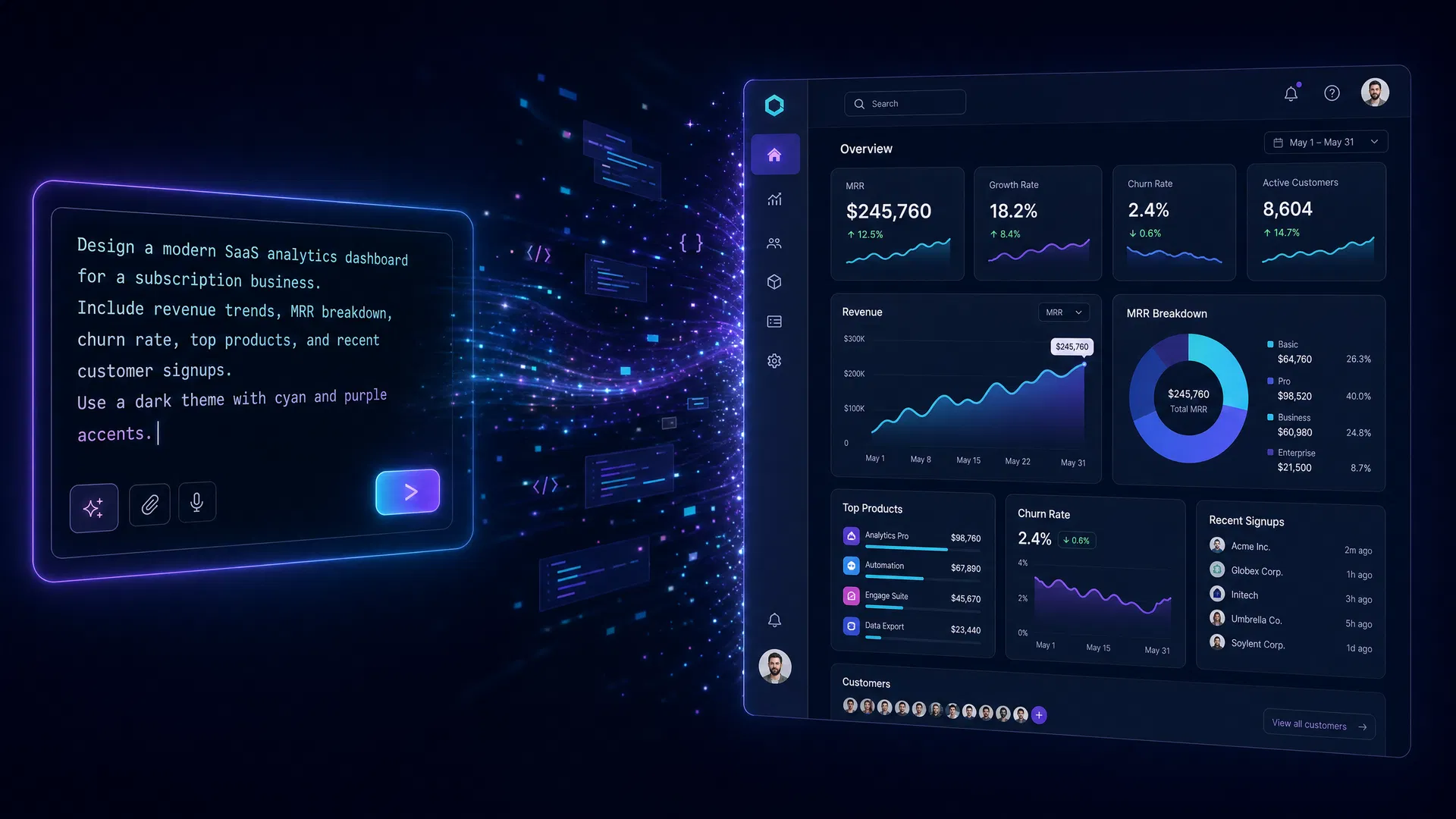
Designers now use AI to generate UI components, layouts, and entire page sections from a plain-English prompt. The result is faster iteration, more creative options, and interfaces that feel genuinely custom.

AI-generated UI design showing a prompt generating a SaaS dashboard instantly
AI Prompt
Build a booking widget for an HVAC company
Generated UI

The demo above shows the core idea: you type a plain-English description of what you need, and an interface materializes. This is not science fiction — tools like Figma AI, Framer AI, and our own internal workflow tools do this today.

For businesses, the practical benefit is speed and customization. Instead of choosing from a library of templates that all look the same, your website can be generated and refined to match your exact brand, audience, and conversion goals. A roofing company's website should not look like a yoga studio's website — and with AI-assisted design, it does not have to.

Our team uses AI-assisted design tools to build custom solutions faster without sacrificing quality. We also use our AI workflow builder to automate the repetitive parts of the design process so our team can focus on the creative decisions that actually matter.

Want to see AI-generated UI in action? Check out our LinkedIn page where we share behind-the-scenes looks at how we build client sites.

04

Voice-First Design

Voice interfaces are moving beyond smart speakers. In 2026, websites and apps are being designed from the ground up to support voice commands, making them faster and more accessible for everyone.

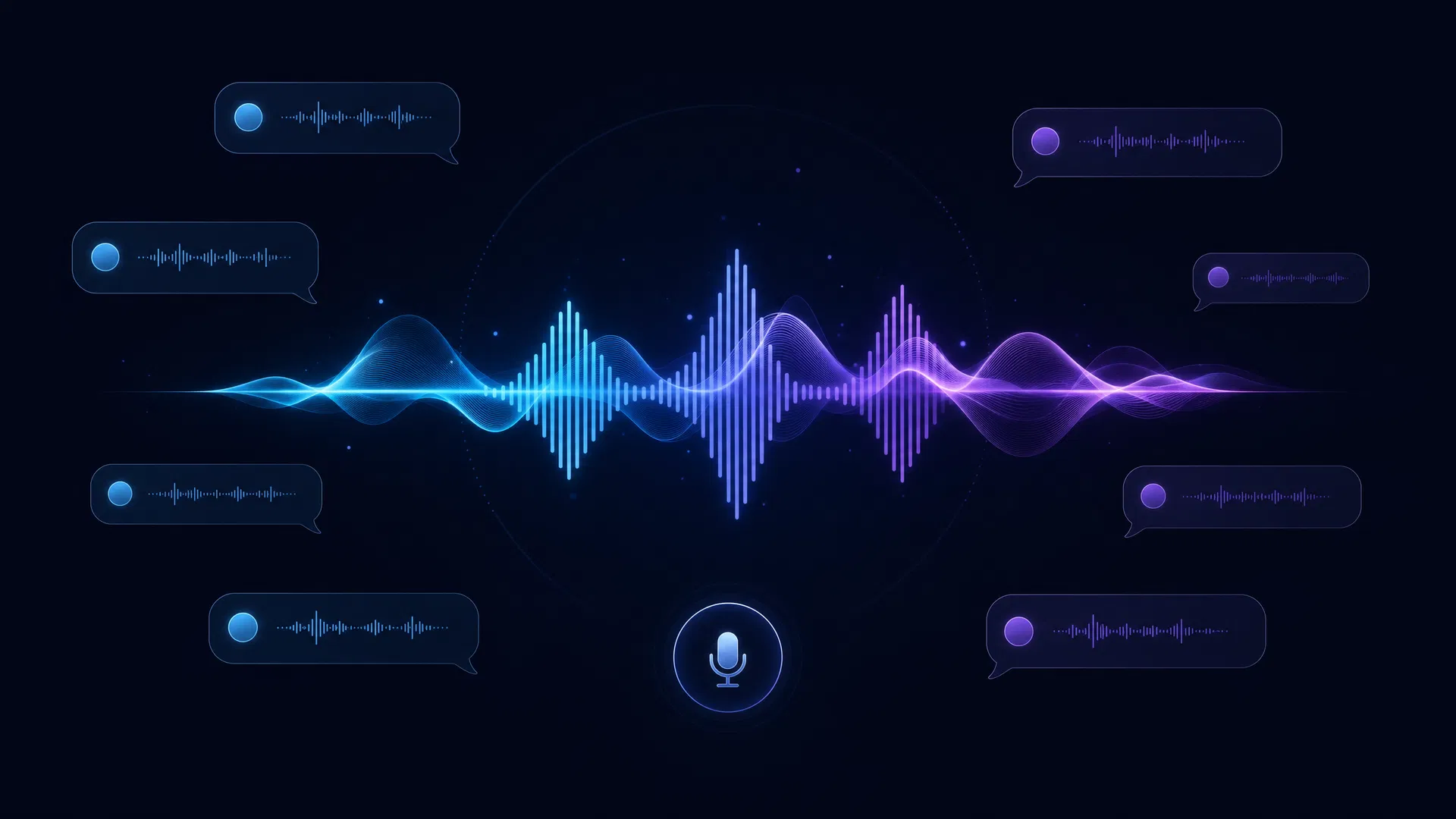
Voice-first UI design with animated sound wave and speech transcript bubbles

Tap mic to speak

For home service businesses, voice-first design is especially powerful. A plumber on a job site cannot type with dirty hands. An HVAC technician driving between jobs should not be tapping through menus. Voice commands let them book the next appointment, check customer notes, or send a review request in seconds — hands-free.

On the customer side, voice search is growing fast. More people are asking their phones and smart speakers questions like "Who is the best HVAC company near me?" or "Book an air conditioning repair for tomorrow morning." Websites that are structured for voice search — with clear, conversational language and FAQ content — capture this traffic.

This connects directly to AI search optimization. For the business case behind these trends, see our free2026 website design trends guide— and compare withlast year's UI trends. Voice queries tend to be longer and more conversational than typed searches, which means your content needs to answer complete questions, not just target keywords. Our SEO team structures every page we build to rank for both typed and spoken queries.

05

Liquid Motion Design

Rigid, boxy layouts are giving way to organic, fluid shapes. Buttons ripple. Sections morph. Backgrounds shift like living gradients. Motion is no longer decoration — it is communication.

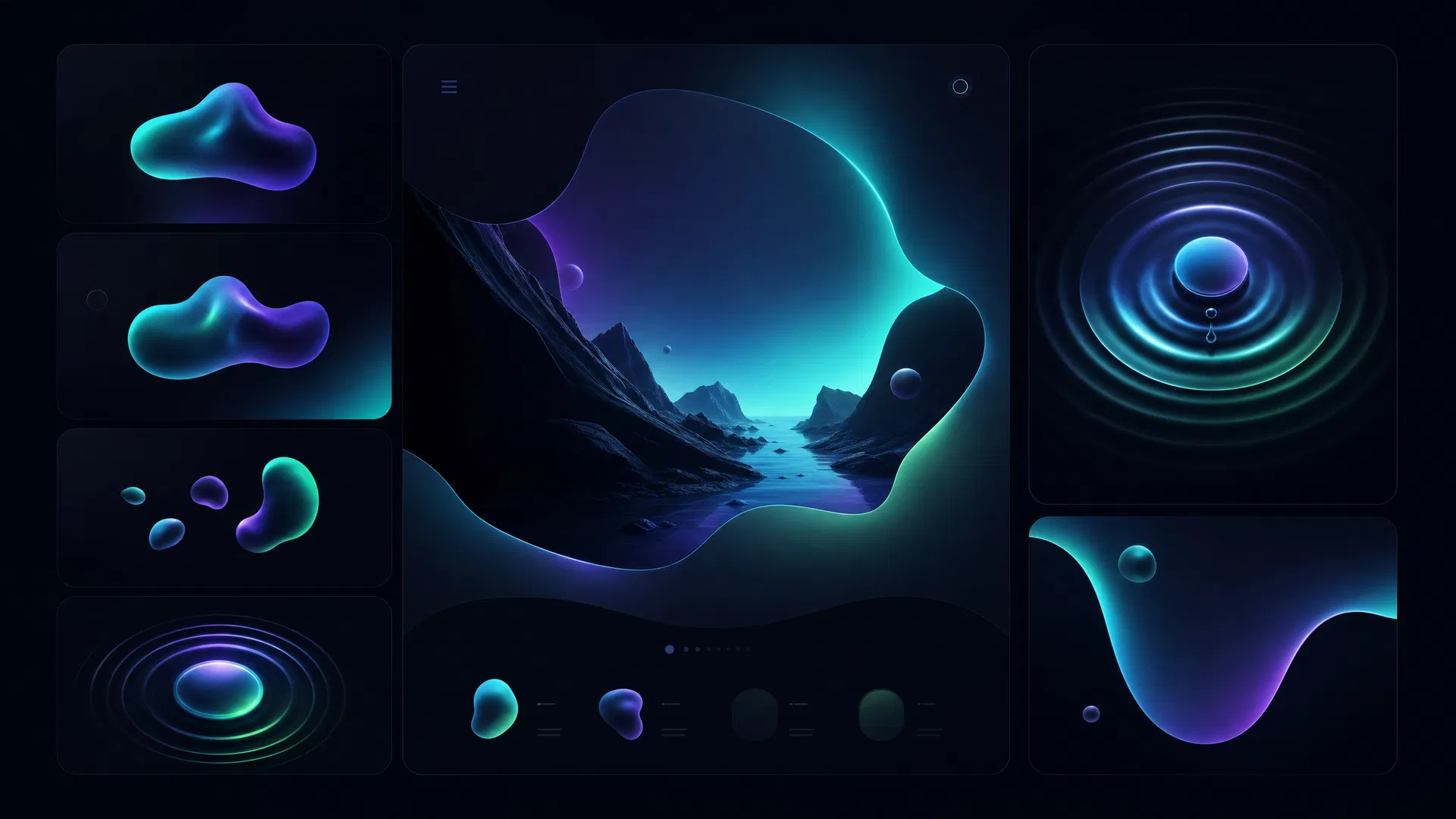
Liquid motion design with morphing blob shapes and fluid page transitions
Move cursor to shift hues

The ripple effect in the demo above is a perfect example of purposeful motion. When you click a button and it ripples outward, your brain receives a clear signal: "That worked." You do not need a loading spinner or a confirmation message. The motion itself communicates success.

Liquid motion also applies to page transitions. Instead of one page blinking out and another blinking in, elements flow from one state to the next. This creates a sense of continuity that makes the website feel like a single, connected experience rather than a collection of separate pages.

For home service websites, liquid motion is most effective on booking flows and quote forms. A form that smoothly transitions from step to step — with fields sliding in and progress bars filling organically — feels easier to complete than a static multi-page form. That translates directly into higher conversion rates.

We build liquid motion into every project through our web design service. See our motion design work on Dribbble — we regularly post animation concepts and UI motion studies there.

06

Hyper-Personalization

One website, infinite versions. In 2026, the best websites show different content, layouts, and calls-to-action based on who is visiting — their industry, location, past behavior, and intent signals.

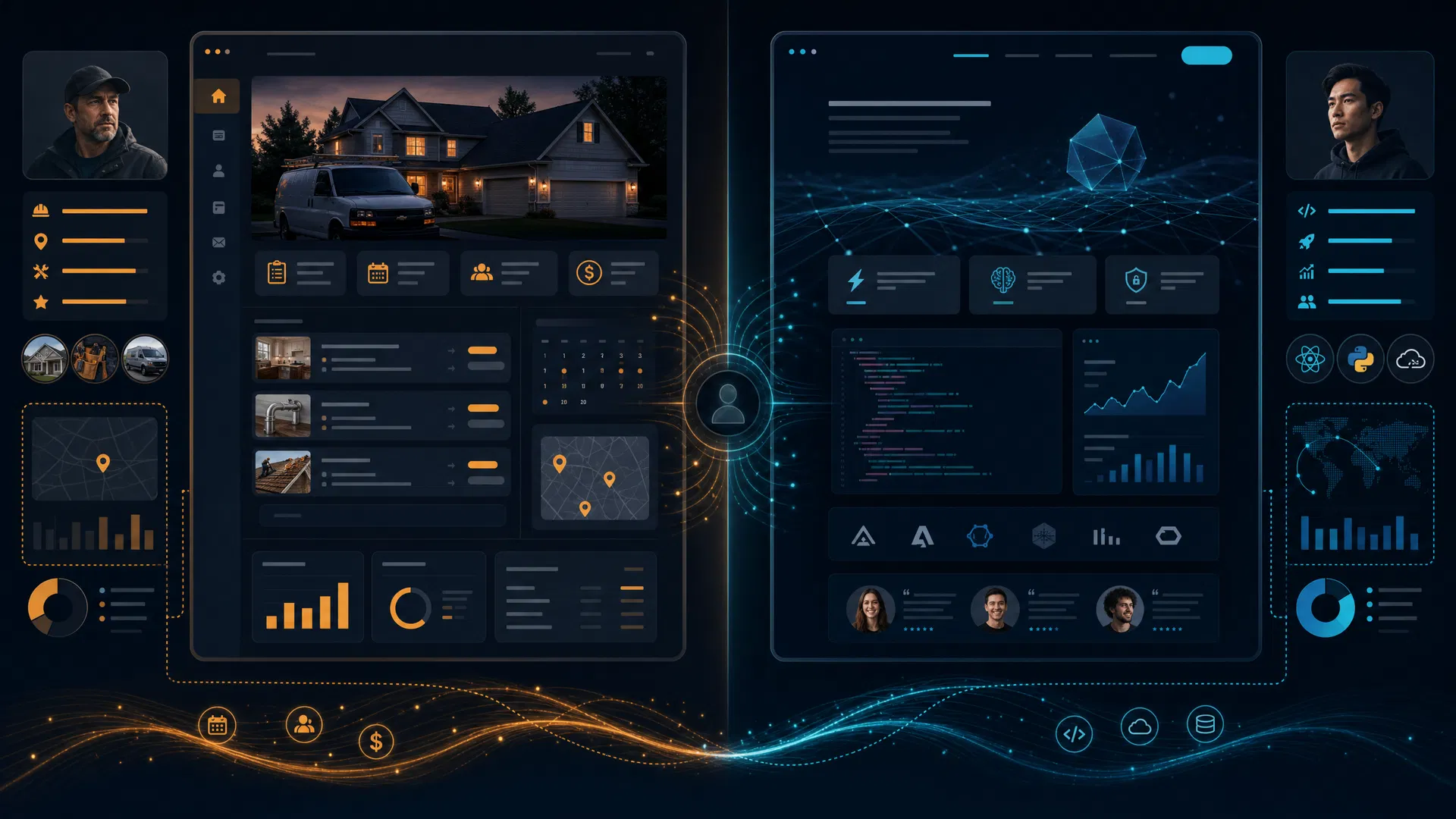
Hyper-personalized website showing different layouts for different user personas
Dashboard tailored for HVAC Owner
Schedule jobs
Track technicians
Send estimates

Imagine a roofing company's website that shows storm damage repair content to visitors coming from a zip code that just had a hailstorm, and shows routine maintenance content to visitors browsing on a clear spring day. No extra work from the business owner — the website figures it out automatically.

This is not just for big companies. Our AI lead generation system uses personalization signals to surface the right offer at the right time. A visitor who has been to your pricing page twice gets a different CTA than a first-time visitor. A visitor from a mobile device at 8 PM gets a "Call Now" button instead of a long contact form.

The demo above shows how the same dashboard can be completely reorganized based on the user's role. An HVAC business owner sees job scheduling tools. A homeowner sees booking and tracking. A marketer sees analytics. Same product, three completely different experiences — all served automatically.

07

Advanced Micro-Interactions

Every click, toggle, and swipe should feel satisfying. In 2026, micro-interactions have evolved from simple hover effects to full haptic-style feedback systems that make digital interfaces feel physical.

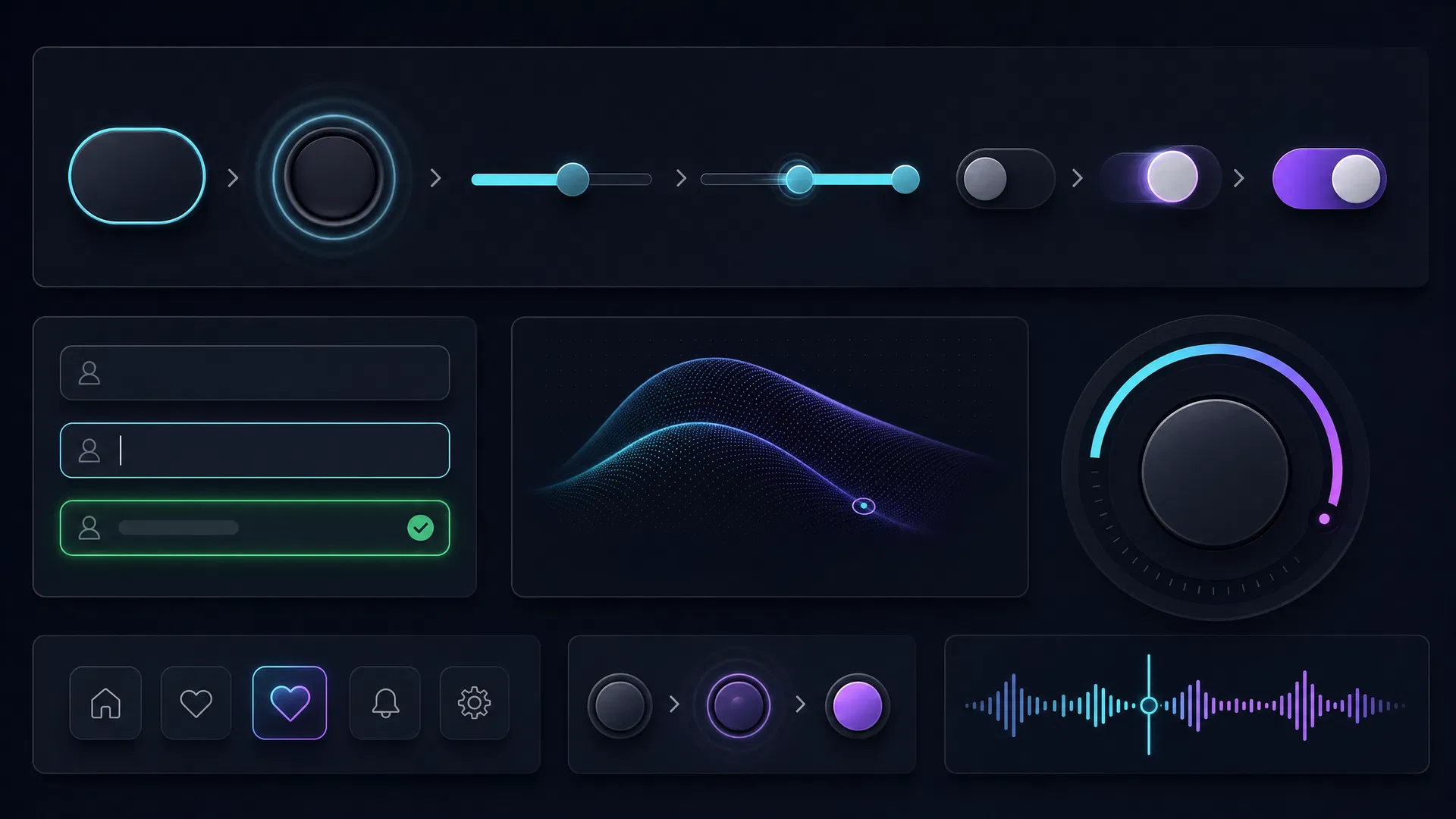
Advanced micro-interactions showing spring physics buttons, sliders, and form validation
Profile completion3%

Try the like button, save button, and notification toggle in the demo. Each one has a distinct animation that communicates exactly what happened. The heart bursts. The star bounces. The toggle springs into place with a satisfying snap. These are not random animations — each one is designed to match the emotional weight of the action.

The progress bar at the bottom of the demo is another example. Watching a bar fill up is inherently motivating. It creates a sense of progress and completion that keeps users engaged. This is why profile completion bars, onboarding checklists, and booking progress indicators all work so well.

For home service businesses, micro-interactions matter most on booking forms, review request flows, and payment pages. A form that validates each field in real time — turning green when correct, shaking gently when wrong — reduces errors and increases completion rates. Our web development team builds these interaction patterns into every form we create.

08

Evolved Dark Mode

Dark mode has grown up. The best dark interfaces in 2026 use a layered elevation system — multiple shades of dark — to create depth and hierarchy without relying on shadows or borders.

Evolved dark mode design with layered surface elevation and multiple dark shades
Comfortable for long sessions

The problem with most dark mode implementations is that they use a single dark color for everything. The background, the cards, the modals — all the same shade of dark gray. The result looks flat and hard to navigate because there is no visual hierarchy.

The evolved approach uses a surface elevation system. The base layer is the darkest. Cards sit one level above — slightly lighter. Modals and dropdowns sit above cards — slightly lighter still. This creates a natural sense of depth without any shadows, which is especially important for OLED screens where true black saves battery.

The demo above lets you switch between three elevation levels to see the difference. Notice how the "Elevated Dark" option feels more spacious and navigable, even though all three versions are dark. This is the kind of detail that separates a professional web design from a template.

Our entire website — the one you are reading right now — uses this layered dark mode system. You can see how we apply it to client projects on our Dribbble and Instagram profiles.

09

Scroll-Driven Storytelling

The best websites in 2026 do not just display information — they tell a story as you scroll. Each section reveals itself in sequence, building toward a clear conclusion and a natural call-to-action.

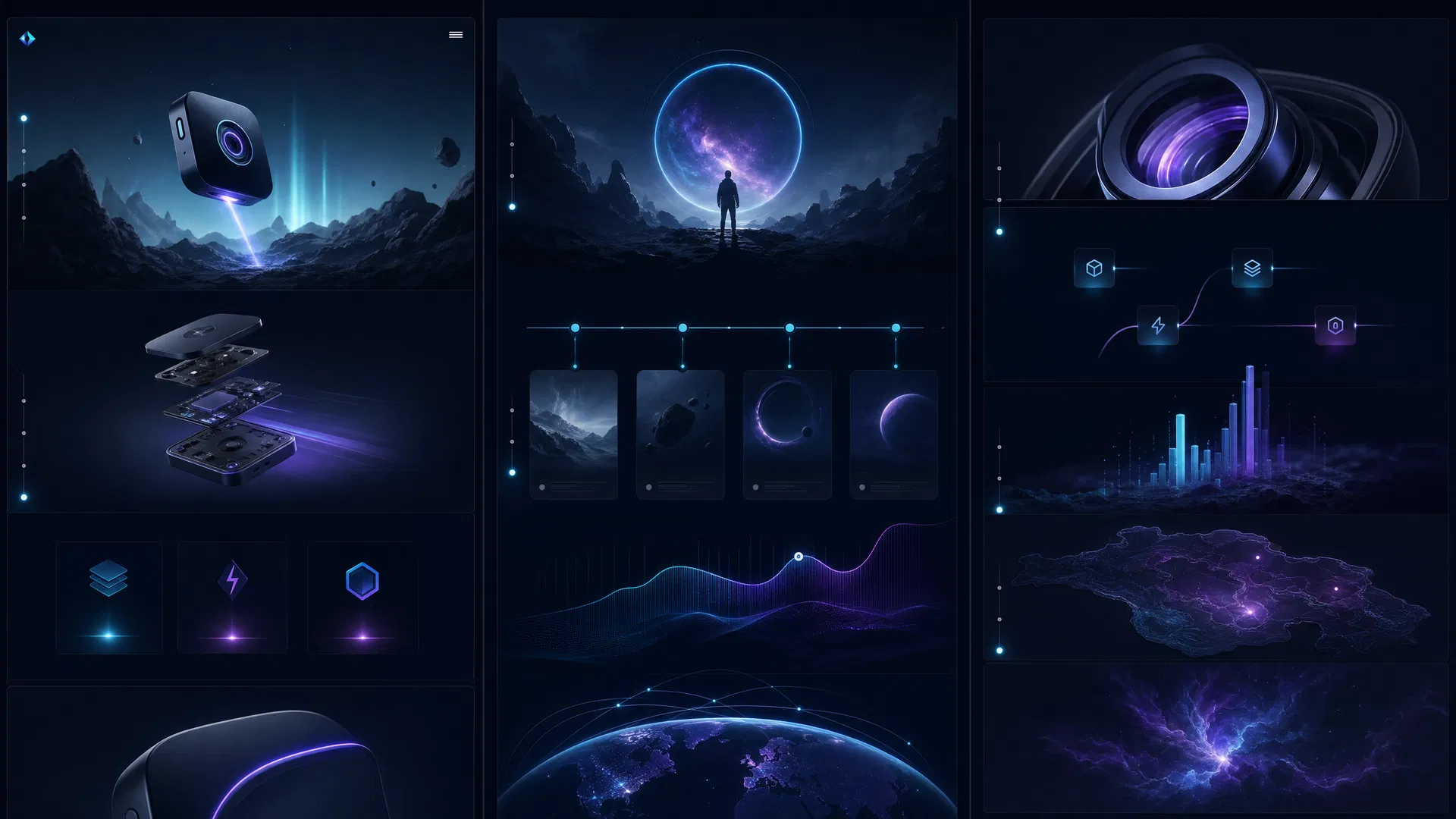
Scroll-driven storytelling website with cinematic reveal animations and timeline
Visitor arrives
Story unfolds
Emotion builds
Conversion happens

Scroll away and back to replay

Scroll the demo above out of view and then back in. The cards animate in sequence, each one building on the last. This staggered reveal creates a sense of narrative — you are not just reading a list, you are following a journey.

For home service businesses, scroll storytelling is most powerful on the homepage and service pages. Instead of showing a wall of text about your company, you guide the visitor through a story: "Here is the problem you have. Here is how we solve it. Here is proof it works. Here is what to do next." Each section appears at exactly the right moment as they scroll.

This approach also helps with SEO and AI search optimization. Pages with clear narrative structure — problem, solution, proof, CTA — match the way AI search engines summarize content. Google's AI Overviews and ChatGPT both favor pages that answer questions in a logical, sequential order.

Our SEO team structures every page we build around this narrative framework, combining scroll storytelling with semantic HTML to maximize both engagement and search visibility.

10

Conversational AI Chat Interfaces

AI chat has become the primary way customers interact with home service businesses online. In 2026, the best chat interfaces feel less like a chatbot and more like a knowledgeable assistant who can actually get things done.

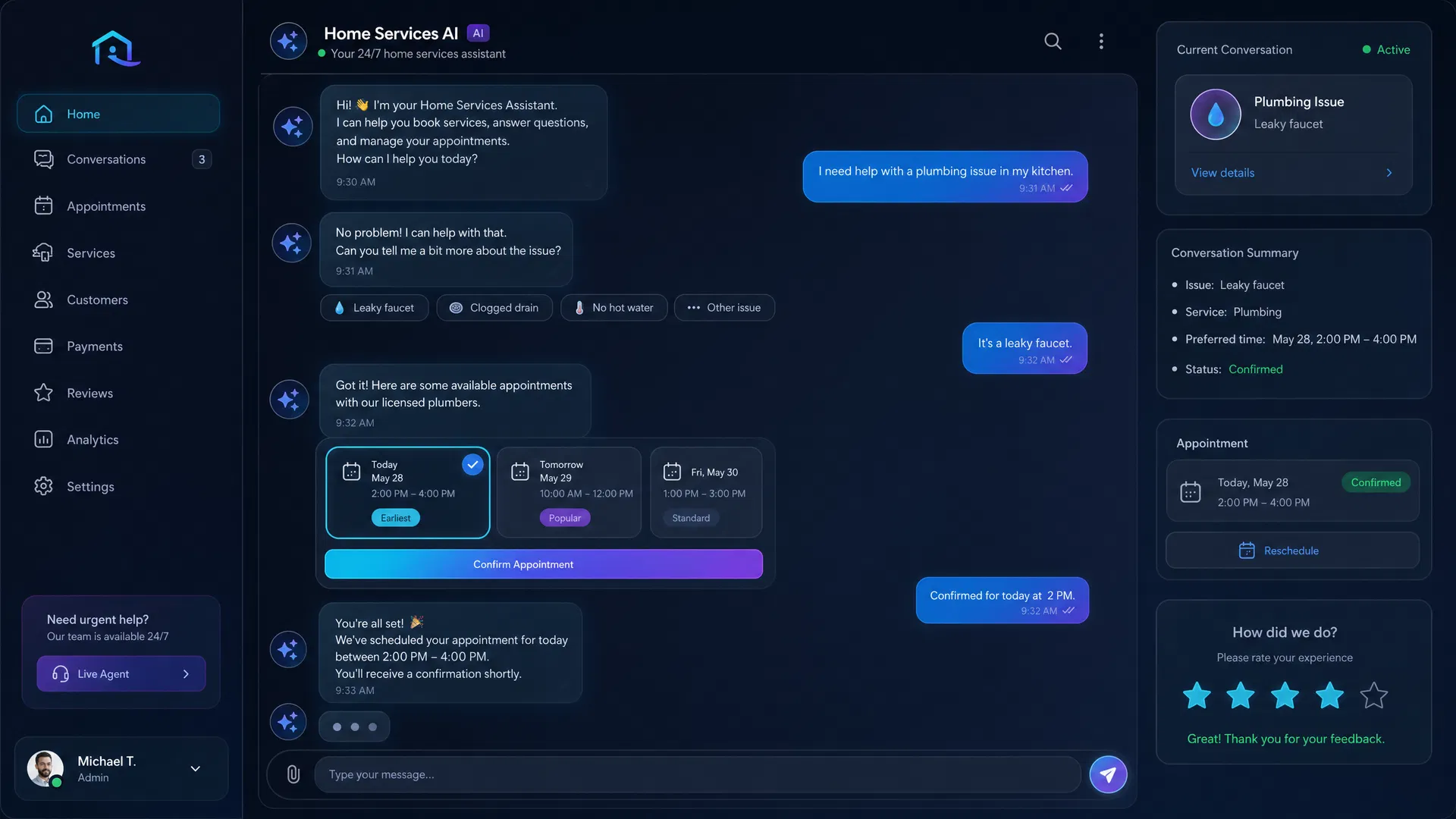
AI chat interface for home services showing appointment booking and quick-reply chips
Hi! I'm your 24/7 home services assistant. How can I help today?
I need an HVAC tune-up before summer.
Great timing! I have openings this week. Would Thursday at 10 AM or Friday at 2 PM work for you?
Thursday works!
Confirmed! ✅ Thursday 10 AM. You'll get a text reminder 24 hours before.

The demo above shows a complete booking flow handled entirely through chat. The customer describes their problem, the AI offers available times, the customer picks one, and the appointment is confirmed — all in under two minutes, at any hour of the day or night.

This is not a hypothetical. Our AI chatbot creation service builds exactly this kind of conversational booking system for home service companies. HVAC companies, plumbers, landscapers, and roofers are using our chatbots to capture leads while their team sleeps.

The design of the chat interface matters as much as the AI behind it. Quick-reply chips reduce friction. Inline booking cards eliminate the need to navigate to a separate page. Typing indicators make the AI feel present and responsive. Satisfaction ratings capture feedback at the moment of peak happiness — right after the appointment is confirmed.

In 2026, a home service website without an AI chat interface is leaving money on the table. Every hour your website is live without one is an hour where a potential customer could not get an answer and went to a competitor. Learn more about our AI lead generation system to see how it works for businesses like yours.

We post real chat conversation examples and chatbot UI designs on Twitter/X @tebeaugroup. Follow us to see the latest updates and case studies.

What This Means for Your Business

AI is the foundation
Every trend in this list is powered by AI in some way. Businesses that embrace AI-driven design will outperform those that do not.
Personalization wins leads
Websites that adapt to the visitor — their industry, location, and behavior — convert at 2–3x the rate of generic sites.
Chat captures after-hours
60% of service calls happen outside business hours. An AI chatbot captures those leads while your team is off the clock.
Design affects SEO
Page experience, Core Web Vitals, and content structure all influence rankings. Good design and good SEO are the same thing in 2026.

Frequently Asked Questions

Let's Build a 2026-Ready Website

Our Dallas team builds websites that use every trend in this article — AI chat, personalization, liquid motion, and SEO-optimized content — to turn your website into your best salesperson.

JM
Written by

Johnathan M. Tebeau

Founder & CEO at Tebeau Group, LLC. 20+ years engineering, 25,000+ websites shipped, 1,250+ client engagements. Specializes in AI-driven growth for home service businesses.

Ready to Build a 2026-Ready Website?

Book a free discovery call and receive a complimentary competitive intelligence audit — no strings attached.